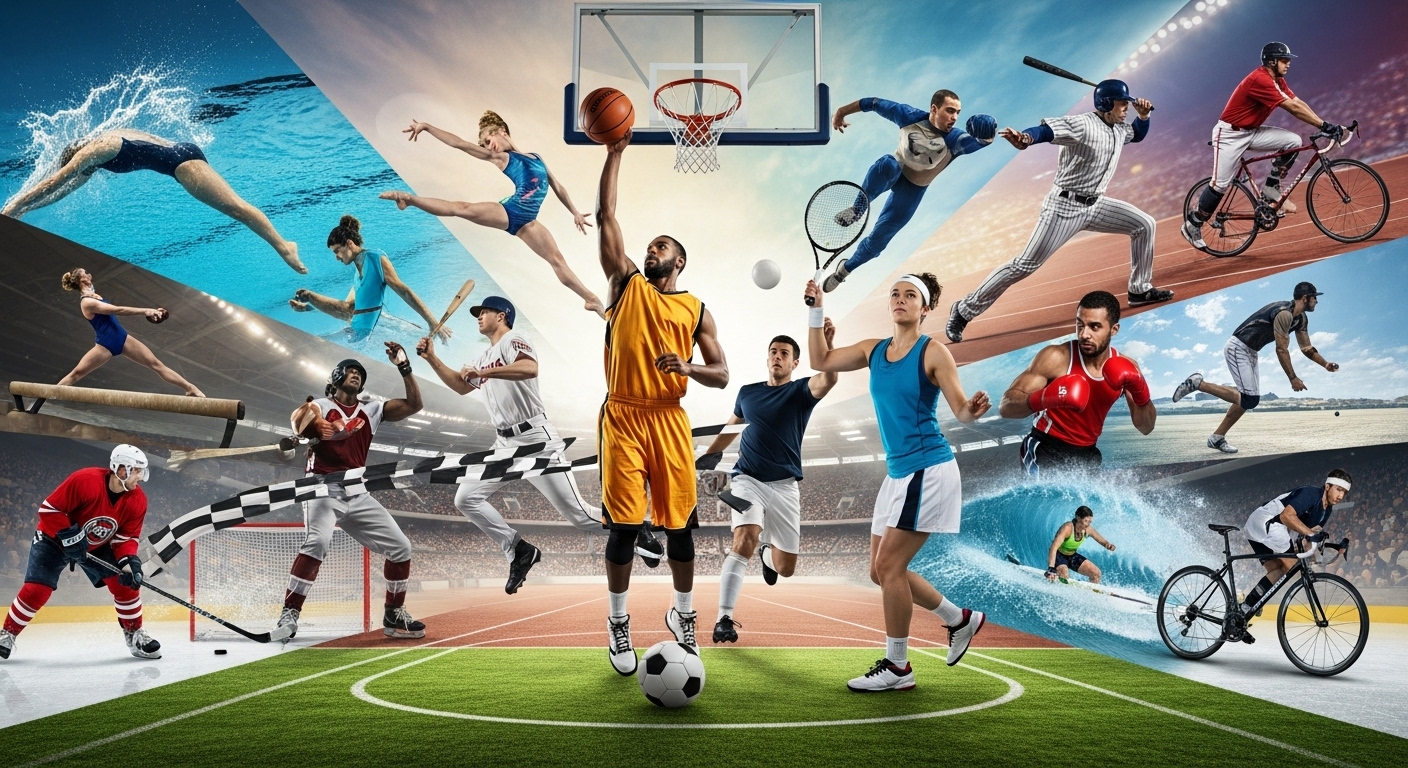
Sports have always held a significant place in human history. They have evolved alongside human civilization, shaping and being shaped by societal changes. Today, sports are more than just a form of entertainment—they are a vital part of culture, global communication, and even social change. From ancient traditions to modern competitions, the journey of sports is rich and diverse. In this blog post, we will take a deep dive into the history, evolution, and profound influence of sports on society.
The Early Beginnings of Sports
The origins of sports can be traced back to the dawn of civilization. In ancient times, physical activity was often intertwined with rituals, religious practices, and even warfare preparation. Some of the earliest recorded instances of competitive sports date back to the ancient Egyptians, Greeks, and Romans, where athletic contests were held to honor deities or mark important events.
In ancient Greece, sports reached a new level of formality with the establishment of the Olympic Games around 776 BC. The games, initially held in Olympia, were a tribute to the Greek god Zeus and featured athletic events such as running, wrestling, and the pentathlon. These competitions were seen not only as tests of physical strength but also as expressions of human potential and achievement. The Greek Olympics set the foundation for the world’s first organized sports event, which continues to thrive to this day.
In contrast, the Romans focused more on spectacle than pure athletic competition. Gladiatorial games, chariot races, and public combat served as both entertainment and a display of imperial power. The Colosseum, the most iconic of ancient Roman arenas, became the epicenter for these grand spectacles, drawing thousands of spectators. These events were often brutal, yet they contributed to the widespread popularity of sports in ancient Rome.
Simultaneously, other cultures also had rich sporting traditions. In ancient China, martial arts such as kung fu were practiced for self-defense and spiritual enlightenment. The Mesoamerican civilizations, including the Maya and Aztecs, played a ball game called “tlachtli,” which had religious significance. Across the world, sports were an integral part of early societies, serving as both a physical activity and a reflection of cultural values.
The Development of Modern Sports
While early civilizations laid the groundwork for sports, it was the 19th century that truly saw the development of modern sports. The Industrial Revolution brought about many changes, including increased leisure time for the working class, urbanization, and the rise of education systems that promoted physical activity. These factors helped transform informal games into structured, competitive sports.
In England, football (soccer) became increasingly popular in the 19th century. Different regions had their own versions of the game, but in 1863, the formation of The Football Association standardized the rules and created the foundations for modern football. Similarly, rugby and cricket began to take shape, each with its own set of standardized rules. As these sports grew in popularity, they spread across the globe, becoming staples of not only British culture but also of the many countries it colonized.
Across the Atlantic, baseball emerged as the dominant sport in the United States during the 19th century. The establishment of Major League Baseball (MLB) in 1869 marked the beginning of professional sports leagues in America, and baseball quickly became an integral part of American culture. In the late 19th and early 20th centuries, sports like basketball and American football also took root, with professional leagues being formed to cater to the increasing demand for organized competitions.
During this time, the first modern Olympic Games were held in Athens in 1896. The Games, inspired by the ancient Greek Olympics, featured athletes from around the world competing in various events. This marked the beginning of the global sporting phenomenon we know today, where athletes from different nations come together to showcase their talents on the world stage.
The Cultural Significance of Sports
Sports are more than just competitions; they serve as mirrors of the cultures and societies in which they exist. They often reflect a nation’s values, social structures, and even its political environment. Throughout history, sports have played a crucial role in shaping identity and fostering a sense of belonging.
In the United States, sports have long been tied to national identity. Baseball, often referred to as America’s pastime, became a symbol of the nation’s growth and development during the 19th and early 20th centuries. Football, which gained traction in the 20th century, became synonymous with American culture, particularly as it grew in popularity after World War II. The Super Bowl, which is now one of the most-watched sporting events in the world, represents the pinnacle of American football and showcases the country’s obsession with sports.
In countries around the world, sports play a similar role in national pride. In Brazil, football (soccer) is an essential part of the national identity, with the country producing some of the greatest players in history, such as Pelé and Ronaldo. In Argentina, football is a passion that transcends the field, while in Spain, the rivalry between football clubs Real Madrid and FC Barcelona is a reflection of the country’s historical and political divisions.
Sports also have the power to bring people together, creating a sense of unity and community. Major sporting events like the FIFA World Cup, the Olympics, and the Rugby World Cup provide a platform for nations to showcase their culture and compete in the spirit of friendly rivalry. These events unite people from all walks of life, transcending language barriers, political differences, and social divides.
Moreover, sports serve as an avenue for social change. Throughout history, athletes have used their platforms to challenge social norms and fight for equality. One of the most famous examples of this is the civil rights movement in the United States, during which athletes like Jackie Robinson and Muhammad Ali became symbols of resistance against racial injustice. Robinson broke the color barrier in Major League Baseball in 1947, while Ali used his fame to speak out against the Vietnam War and advocate for civil rights in the 1960s and 1970s.
More recently, athletes like Colin Kaepernick, who knelt during the national anthem to protest police brutality, and Serena Williams, who has championed gender equality in sports, continue to use their fame to draw attention to pressing social issues.
The Commercialization of Sports
As sports grew in popularity, they became more commercialized, turning into massive industries that generate billions of dollars every year. The rise of mass media, especially television, played a significant role in transforming sports into a global business. The 20th century saw the explosion of sports broadcasting, with networks like ESPN becoming household names and broadcasting games to millions of viewers worldwide.
Television contracts, sponsorship deals, and advertising revenue became a major source of income for sports leagues and organizations. This commercialization led to the rise of professional athletes as global superstars, with endorsement deals and merchandise sales adding to their wealth. Figures like Michael Jordan, Tiger Woods, and Cristiano Ronaldo became not just athletes but also brands, using their influence to sell products and shape popular culture.
While commercialization has brought immense financial benefits to the sports industry, it has also raised concerns about the integrity of the games. The pressure to generate profits has led to issues like corruption, doping scandals, and the exploitation of athletes. In some cases, the commercialization of sports has shifted the focus away from the core values of athletic competition—fairness, sportsmanship, and the pursuit of excellence—toward the bottom line.
The rising salaries of professional athletes and the increasing amounts of money involved in sponsorships and broadcasting rights have also created a divide between elite athletes and amateur players. As the gap between professional and amateur sports continues to grow, questions arise about the accessibility of sports for young athletes who may not have the financial resources to compete at the highest level.
Technology’s Impact on Sports
Technology has revolutionized every aspect of the sporting world, from equipment and training to the fan experience. In terms of equipment, advancements in materials science have led to the creation of lighter, more durable sports gear. Athletes now use high-tech equipment that enhances performance, improves safety, and offers a competitive edge. For example, cyclists use aerodynamic bikes, tennis players use racquets made from carbon fiber, and football players wear advanced helmets that reduce the risk of concussion.
In training, technology has enabled athletes to optimize their performance through data analytics and wearable devices. Tools like heart rate monitors, GPS trackers, and motion sensors allow coaches and athletes to track metrics such as speed, endurance, and technique. This data-driven approach has revolutionized how athletes prepare for competition and recover from injuries.
Technology has also transformed the way sports are consumed. Television broadcasts have evolved from simple broadcasts to high-definition and 3D viewing experiences. In addition, the rise of social media has created new opportunities for fan engagement, allowing fans to interact with athletes and other fans in real-time. Virtual reality (VR) is even beginning to play a role in the fan experience, with immersive VR experiences offering fans the chance to feel like they’re on the field or in the arena during major sporting events.
Perhaps one of the most significant technological innovations in sports is the introduction of video assistant referees (VAR) and instant replay. These technologies have been implemented in sports like football, tennis, and basketball to reduce human error in officiating and ensure more accurate decisions. While these technologies have improved the fairness of the game, they have also sparked debates about their impact on the flow of the match and the emotional intensity of live sports.
The Future of Sports
As we look ahead to the future, several trends are shaping the next generation of sports. One major shift is the increasing focus on inclusivity and diversity. Women’s sports, which have historically been underfunded and undervalued, are gaining more attention and support. The rise of women’s leagues in basketball, soccer, and tennis is helping to break down barriers and create more opportunities for female athletes.
At the same time, the landscape of professional sports is becoming more global. The rise of eSports, for example, is changing the way people think about competitive athletics. What was once considered a niche activity is now a billion-dollar industry, with professional gamers competing in tournaments that draw millions of viewers.
As sports continue to evolve, it is clear that their role in society will only become more significant. They are not just games—they are powerful tools for social change, platforms for global communication, and reflections of our values, our ambitions, and our humanity.