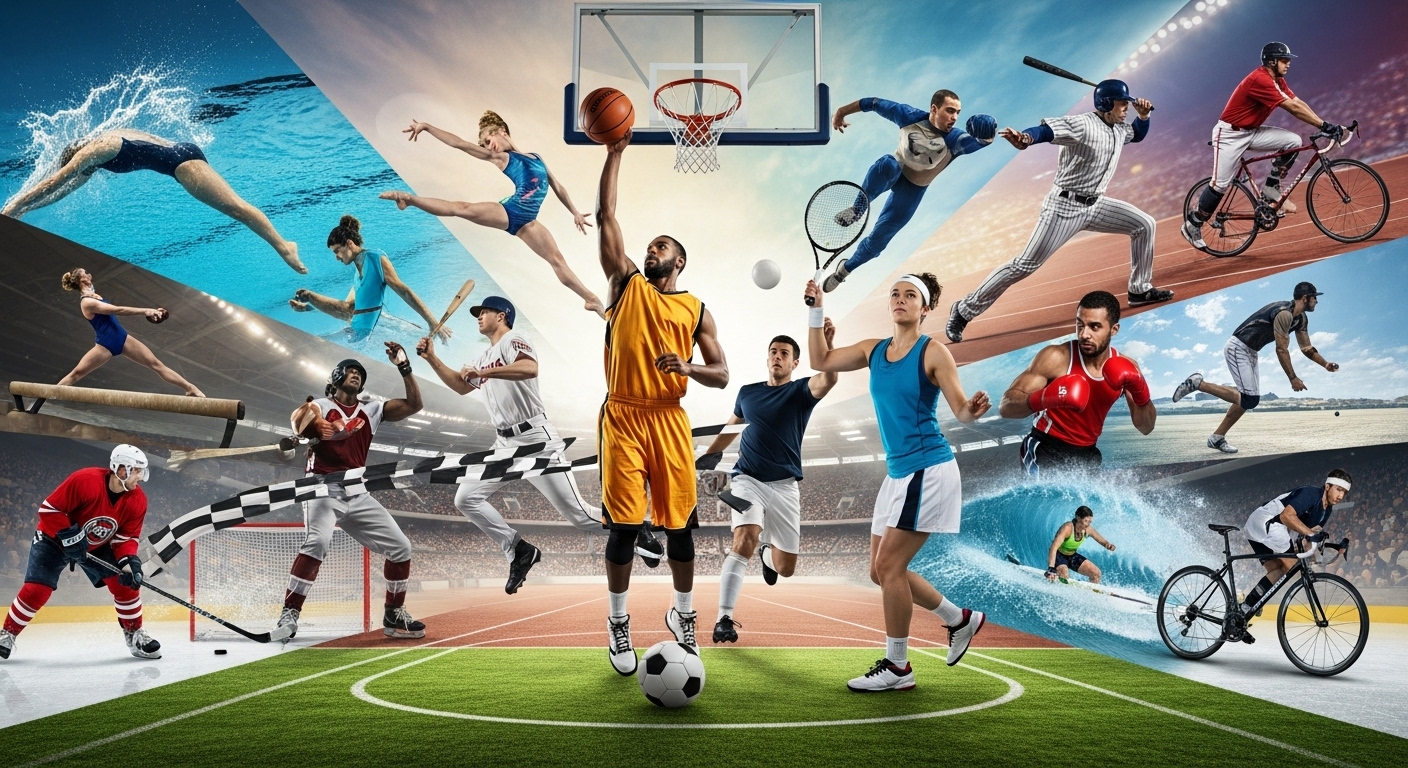
Sports have always been an integral part of human civilization, transcending geographical, cultural, and social boundaries. Whether played casually in the streets, watched in massive stadiums, or celebrated through national and international competitions, sports shape the way people live, communicate, and perceive the world. From their ancient origins to their current prominence in modern society, sports have proven to be a powerful tool for promoting unity, building character, fostering economic growth, and even influencing political movements. This blog will delve deep into the historical, social, cultural, and economic significance of sports, exploring their profound impact on individuals and communities alike.
The Historical Evolution of Sports: From Ancient Rituals to Global Phenomenon
The origins of sports can be traced back to ancient civilizations, where physical contests were often part of religious ceremonies or military training. The first known recorded athletic competition occurred in 776 BCE in ancient Greece, when the Olympic Games were born. The Games were held in honor of the Greek god Zeus and quickly became a central event in Greek culture. These competitions included running, boxing, wrestling, and chariot racing, among others, and provided an opportunity for various city-states to come together peacefully to engage in friendly rivalry.
In ancient Rome, sports took a more violent turn, with gladiatorial combat and chariot racing dominating public spectacles. These events were less about athletic prowess and more about providing entertainment for the masses while showcasing the might and opulence of the Roman Empire. The gladiatorial games, in particular, served both as a means of pacifying the public and as a tool for demonstrating imperial power. However, despite their brutal nature, these events contributed to the evolution of spectator sports.
The Middle Ages saw a decline in the organized sports of antiquity, but recreational activities continued. Jousting tournaments, archery contests, and early forms of ball games were common in Europe. It wasn’t until the Renaissance and the Enlightenment periods that organized sports began to regain prominence. The codification of rules and the establishment of formal competitions began to take shape during the 18th and 19th centuries, especially in Europe. The Industrial Revolution played a crucial role in the global expansion of sports, as urbanization, increased leisure time, and the development of modern transportation helped bring people together to compete.
The Professionalization of Sports: The Emergence of Global Competitions
By the late 19th century, sports had become increasingly organized and commercialized. The establishment of official leagues, clubs, and associations led to the rise of professional athletes, and sports competitions began to attract large audiences. The development of standardized rules across various sports allowed them to spread beyond local and regional boundaries to a more global stage.
The modern Olympic Games, which were revived in 1896 by Pierre de Coubertin, epitomized this shift towards globalized competition. What began as a small gathering of athletes from a few countries soon grew into one of the world’s most prestigious and watched events. Today, the Olympics bring together athletes from virtually every nation, competing not only for individual glory but also for national pride. The international scope of the Games has made it a unique symbol of unity in a world often divided by political and cultural differences.
In parallel, professional sports leagues such as the National Football League (NFL), National Basketball Association (NBA), Major League Baseball (MLB), and European football leagues have become major global entities, with millions of fans worldwide. The growth of these leagues has not only elevated the status of athletes but has also transformed sports into an industry worth billions of dollars annually. The increasing commercialization of sports, fueled by television deals, sponsorships, and merchandise sales, has further cemented sports as a global business.
The Social Impact of Sports: Bridging Divides and Building Community
One of the most significant roles sports play in modern society is their ability to bring people together. Whether it’s a local soccer match in a community park or the global spectacle of the FIFA World Cup, sports serve as a common language that transcends cultural, social, and economic boundaries. They create a sense of unity and belonging that is not often found in other areas of life. When people gather to watch or participate in a sporting event, they set aside their differences and celebrate a shared experience.
Sports are often seen as a great equalizer. In a sporting context, people of different backgrounds, ages, genders, and abilities can come together, collaborate, and engage in healthy competition. This has the power to break down social barriers, promote inclusion, and foster mutual respect. For example, team sports like football, basketball, and rugby require individuals to work together towards a common goal, teaching valuable lessons in teamwork, leadership, and communication.
Moreover, sports offer a sense of identity, especially for marginalized groups. In the United States, the Civil Rights Movement of the 1960s found an unlikely ally in sports. Athletes like Muhammad Ali, Jackie Robinson, and Billie Jean King used their platforms to address racial inequality and promote social justice. Today, athletes continue to wield their influence for political causes, challenging societal norms and advocating for change.
Women’s participation in sports has also seen remarkable progress. Historically, women faced significant barriers to competing in sports, with many believing that physical competition was inappropriate for women. However, the passage of Title IX in the United States in 1972, which mandated equal opportunities for women in education and athletics, helped pave the way for the rise of women’s sports. Athletes like Serena Williams, Mia Hamm, and Simone Biles have become icons, not only for their athletic achievements but also for their advocacy of gender equality.
The Economic Power of Sports: A Multi-Billion Dollar Industry
The financial impact of sports on the global economy cannot be overstated. Professional sports leagues, international tournaments, and the media surrounding them generate billions of dollars in revenue every year. The sale of television broadcasting rights, sponsorship deals, ticket sales, merchandise, and advertising contribute to the immense financial power of sports.
Major sporting events like the FIFA World Cup, the Super Bowl, and the Olympic Games are not only cultural phenomena but also massive economic engines. Hosting such events can significantly boost the economy of the host city or country, generating millions of dollars in tourism, hospitality, and infrastructure development. The 1992 Barcelona Olympics, for example, helped transform the city into a global tourist destination and spurred urban development that reshaped its landscape. Similarly, the 2008 Beijing Olympics were seen as a stepping stone for China to enhance its international profile and strengthen its economic ties with the rest of the world.
The rise of professional sports leagues has also created a complex ecosystem of revenue generation. Teams in the NFL, NBA, MLB, and European football leagues are multi-million-dollar businesses that rely on ticket sales, television rights, sponsorships, and merchandise sales to stay profitable. Athletes have become some of the most marketable individuals globally, with endorsement deals contributing significantly to their personal wealth. For instance, athletes like Cristiano Ronaldo, LeBron James, and Lionel Messi earn as much from endorsements as they do from playing their respective sports.
In addition to the direct economic benefits, sports also play a crucial role in the development of local economies. Sporting events create jobs, stimulate tourism, and attract investments in infrastructure, such as stadiums, transportation, and hotels. The ripple effects of these investments can be felt long after the event itself, creating lasting economic growth in the region.
Sports and Technology: Shaping the Future of Competition
As technology continues to advance, the way sports are played, watched, and experienced is evolving rapidly. Innovations in training techniques, equipment, and performance analytics are changing the way athletes train and compete. Wearable technology, such as fitness trackers and smart clothing, enables athletes to monitor their performance in real-time and make data-driven decisions to improve their skills.
Video analysis and motion capture systems are now commonly used to break down athletic performances, providing coaches and athletes with invaluable insights into areas of improvement. In addition, virtual reality (VR) and augmented reality (AR) are beginning to play a role in both training and fan engagement. VR allows athletes to simulate competition scenarios in a controlled environment, while AR enhances the fan experience by providing real-time stats and interactive features during live events.
Furthermore, the digital revolution has brought sports into the homes of millions through online streaming platforms and social media. Fans can now watch their favorite teams and athletes from anywhere in the world, creating a global audience for even the most niche sports. Platforms like YouTube, Instagram, and Twitter have made it easier for athletes to engage with their followers, promoting their personal brands and creating new avenues for sponsorship and endorsement deals.
The future of sports is also being shaped by the growth of eSports, or competitive video gaming. With an estimated global audience of over 450 million people, eSports has become a legitimate sport, attracting sponsorships, tournaments, and professional players. Major sporting organizations have begun to invest in eSports, and video game titles like League of Legends, Dota 2, and Fortnite have established their own global competitions with multi-million-dollar prize pools.
The Global Influence of Sports: Diplomacy, Politics, and International Relations
Sports have often played a pivotal role in international relations, serving as a tool for diplomacy and political expression. The concept of “sports diplomacy” refers to the use of sports as a means of fostering international cooperation, easing political tensions, and promoting cultural exchange. One of the most famous examples of sports diplomacy occurred during the Cold War with the “Ping Pong Diplomacy” of the 1970s. The United States and China, who were engaged in tense political relations, used table tennis to bridge the divide. American table tennis players were invited to China in 1971, a move that helped thaw relations between the two countries and paved the way for President Richard Nixon’s historic visit to China in 1972.
Sports have also served as a platform for political protest. One of the most iconic moments in sports history occurred at the 1968 Mexico City Olympics, when American athletes Tommie Smith and John Carlos raised their fists in a Black Power salute during the national anthem in protest of racial inequality in the United States. The image of their raised fists became a powerful symbol of the civil rights movement.
Today, athletes continue to use their platforms to advocate for political causes. Whether it’s Colin Kaepernick’s protest against police brutality by kneeling during the national anthem or the widespread calls for racial justice following the death of George Floyd, sports have proven to be a space where political expression and social activism can converge.
Conclusion: The Enduring Power of Sports
In conclusion, sports are much more than just games. They are an integral part of human culture, providing entertainment, promoting unity, and shaping societal values. From their ancient origins to their modern-day global influence, sports continue to transcend borders, both physical and cultural, bringing people together in ways few other institutions can. They inspire individuals to push their limits, teach valuable life skills like teamwork and perseverance, and offer a platform for addressing societal issues. As we look to the future, the role of sports in shaping our world will only continue to grow, driving not just competition but also positive social change on a global scale.