Introduction
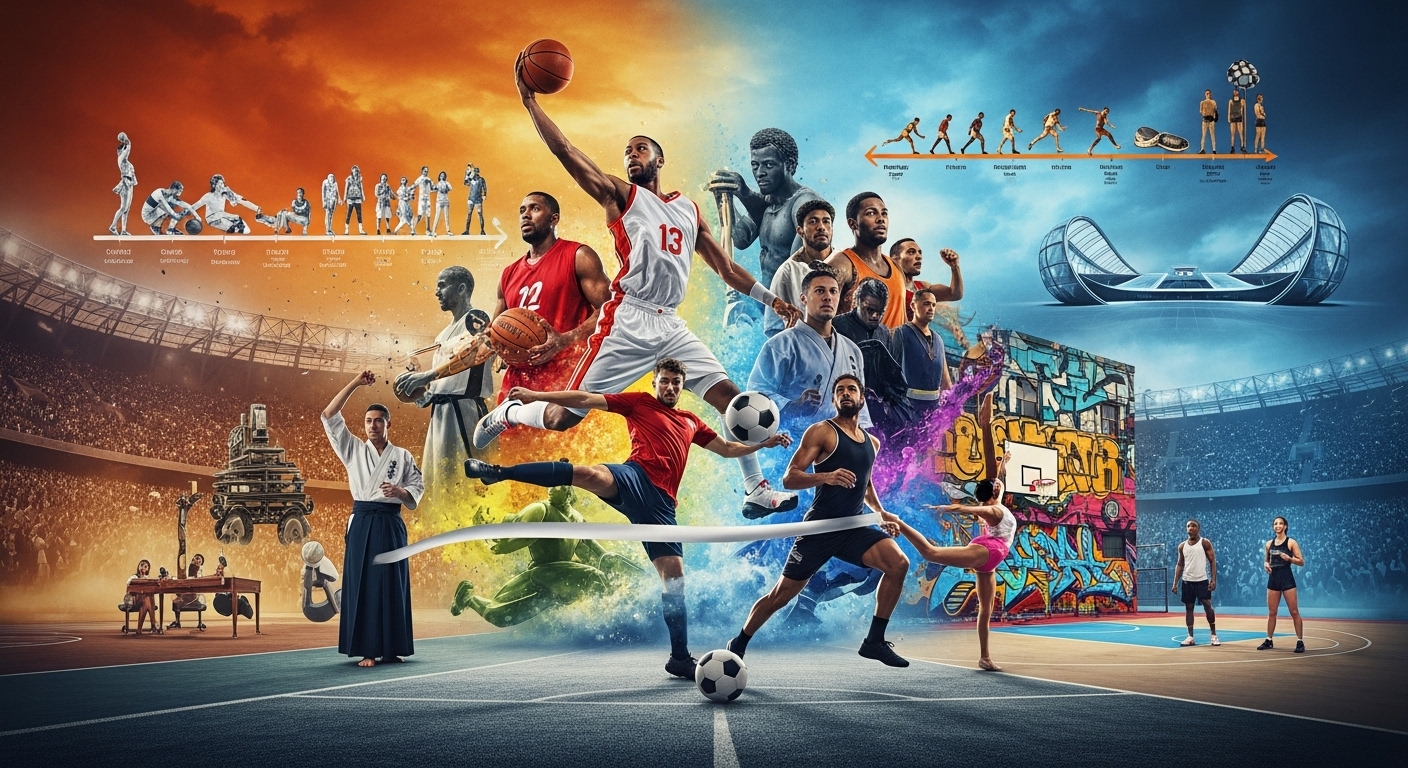
Sports have always been an integral part of human civilization, evolving from simple pastimes in ancient societies to the complex, global industries they are today. Whether it’s football, cricket, basketball, or athletics, sports hold a unique place in the hearts of millions, providing entertainment, fostering camaraderie, and promoting physical fitness. But how did sports come to hold such significance in our daily lives? This blog delves into the rich history and the evolution of sports, tracing their origins, transformation, and the impact they have on society today.
The Origins of Sports: A Glimpse into Ancient History
The roots of sports can be traced back thousands of years. In ancient civilizations, physical competitions were often part of religious or cultural rituals. The earliest evidence of organized sports dates back to the Sumerians around 3000 BC, who were known to engage in early forms of running and ball games. The ancient Egyptians also participated in sporting activities such as wrestling, archery, and a form of swimming that was quite advanced for its time.
However, it was in ancient Greece that sports began to take a more recognizable form. The Greek Olympics, which started in 776 BC, are considered the first organized sporting events in history. The Games were not just a demonstration of physical prowess but also a tribute to the gods, especially Zeus. Athletes competed in a range of events including foot races, wrestling, boxing, and chariot racing. The idea of competition and striving for excellence was celebrated, and this laid the foundation for modern Olympic ideals.
The Romans, too, made significant contributions to the world of sports. Gladiator contests, chariot racing, and other forms of entertainment in arenas like the Colosseum became major cultural events. While these events were far more brutal than what we would consider sports today, they reflect the importance of physical contests in shaping society’s social fabric.
The Medieval Era: Sports Take a Backseat
During the Medieval period, sports took a backseat to more pressing concerns, such as survival, war, and religion. However, physical activities remained an important part of society, especially among the nobility. Knights trained in various martial arts, such as jousting, archery, and swordsmanship. These competitions were often part of tournaments held to showcase skills that were useful in battle.
Peasants, on the other hand, engaged in less formalized activities such as folk games and festivals, which often involved rudimentary forms of ball games, wrestling, and running. One of the most famous medieval sports was the game of “mob football” in England, a chaotic, no-rules type of game played between two villages, often involving hundreds of players.
Despite the lack of organization, these informal sports provided the foundation for the more structured games that would emerge later in history.
The Renaissance and Enlightenment: A New Age for Sports
With the dawn of the Renaissance came a renewed interest in human achievement, and sports were no exception. The intellectual movement of the period sought to balance mind and body, and physical activity was seen as an essential part of this balance. As European societies began to organize themselves in more systematic ways, the concept of modern sports slowly began to take shape.
One of the key developments in this period was the establishment of formalized rules for games. For example, the game of tennis, which originated in France in the late 12th century, began to take a more structured form in the 16th century. The game of cricket, which has since become one of the most beloved sports in the world, began to emerge in England during the late 16th century.
The Enlightenment, with its emphasis on reason and scientific thinking, also brought about new ways of thinking about human performance. The idea that physical activity could be used to improve one’s health became more widespread, setting the stage for the development of organized sports in the following centuries.
The Birth of Modern Sports: 19th Century and Beyond
The 19th century marked a turning point in the history of sports. Industrialization, urbanization, and the rise of the middle class led to the establishment of many modern sports as we know them today. The need for standardized rules, fair competition, and organized leagues became more apparent, and new institutions began to emerge to regulate these activities.
The Formation of National and International Organizations
One of the most significant developments of the 19th century was the formation of national and international governing bodies for sports. For instance, the formation of the Football Association in England in 1863 laid the foundation for the standardized rules of football (soccer), which would later spread across the globe. This era also saw the emergence of cricket clubs, tennis associations, and rugby unions, each of which played a crucial role in formalizing the rules of their respective sports.
The founding of the International Olympic Committee (IOC) in 1894 by Pierre de Coubertin was another key milestone. Inspired by the ancient Greek tradition, Coubertin sought to revive the Olympic Games and create an event that would unite countries through sport. The first modern Olympic Games were held in Athens in 1896, with athletes from 13 nations competing in a variety of events.
The Rise of Professional Sports
The latter part of the 19th century also witnessed the rise of professional sports. Baseball, once a popular pastime in the United States, began to transition into a professional league in the 1860s, and by the early 20th century, other sports like basketball, American football, and ice hockey followed suit. The growth of sports media, including newspapers and eventually radio and television, helped to expand the reach of these sports and turn athletes into celebrities.
The commercialization of sports in the 20th century led to the establishment of lucrative professional leagues such as the National Football League (NFL), National Basketball Association (NBA), and Major League Baseball (MLB). As these leagues grew in popularity, the financial incentives for athletes also increased, making sports a career choice for many.
The Globalization of Sports in the 20th Century
The 20th century saw the global expansion of sports, driven by mass media, improved transportation, and international competitions. The Olympics, which began as a small event in Athens, grew into the largest sporting spectacle in the world, drawing competitors from nearly every country.
Television and radio broadcasts brought sports into homes worldwide, allowing fans to follow their favorite teams and athletes no matter where they lived. The rise of satellite TV in the 1980s further revolutionized the sports industry, bringing live coverage of international events to millions of viewers across the globe.
Football (soccer) became a global phenomenon, with leagues in Europe, South America, and Africa gaining millions of followers. The FIFA World Cup, which began in 1930, became the most-watched sporting event on the planet. Similarly, other sports like basketball, tennis, and Formula 1 gained international recognition, with athletes like Michael Jordan, Serena Williams, and Ayrton Senna becoming global icons.
The Role of Technology in Modern Sports
In recent decades, technology has played a pivotal role in shaping the sports industry. From performance-enhancing equipment to advanced analytics, sports have become more data-driven and technologically advanced. High-speed cameras, sensors, and video analysis have allowed athletes to refine their techniques, while fans can now enjoy better-quality broadcasts and interactive viewing experiences.
Sports analytics has also become a huge industry, with teams and coaches using data to make strategic decisions. In sports like baseball and basketball, advanced statistics have become central to evaluating players and predicting outcomes.
Technology has also impacted the fan experience. Streaming platforms, social media, and fan apps have allowed people to follow their favorite teams and athletes in real time, while also enabling fan engagement through online communities and direct interaction with players and coaches.
The Social Impact of Sports
Beyond the entertainment value, sports have a profound social impact. They bring people together, transcend cultural and language barriers, and promote physical and mental well-being. International competitions like the Olympics and the FIFA World Cup serve as platforms for showcasing global unity and sportsmanship.
Sports also play a critical role in youth development, teaching important life skills such as teamwork, discipline, and resilience. Many educational institutions and communities rely on sports as a tool for promoting health, fitness, and inclusivity.
In recent years, sports have also become a platform for social change. Athletes have used their positions to raise awareness about important issues, such as racial equality, gender discrimination, and mental health. Movements like “Black Lives Matter” and advocacy for LGBTQ+ rights have found support within sports communities, amplifying the power of sport as a catalyst for social progress.
Conclusion: Sports as a Constant Force in Society
From their humble beginnings in ancient civilizations to their current status as global industries, sports have undergone a remarkable evolution. They have shaped and been shaped by society, reflecting the cultural, economic, and technological changes of the times.
Today, sports are no longer just a form of entertainment—they are a reflection of human values, aspirations, and a testament to our collective love for competition and achievement. As we look toward the future, it’s clear that sports will continue to evolve, with new technologies, new sports, and new opportunities for athletes and fans alike.